Projects
Ongoing projects that are my main focus right now.
Genome language models for epigenomic predictions and distal regulation
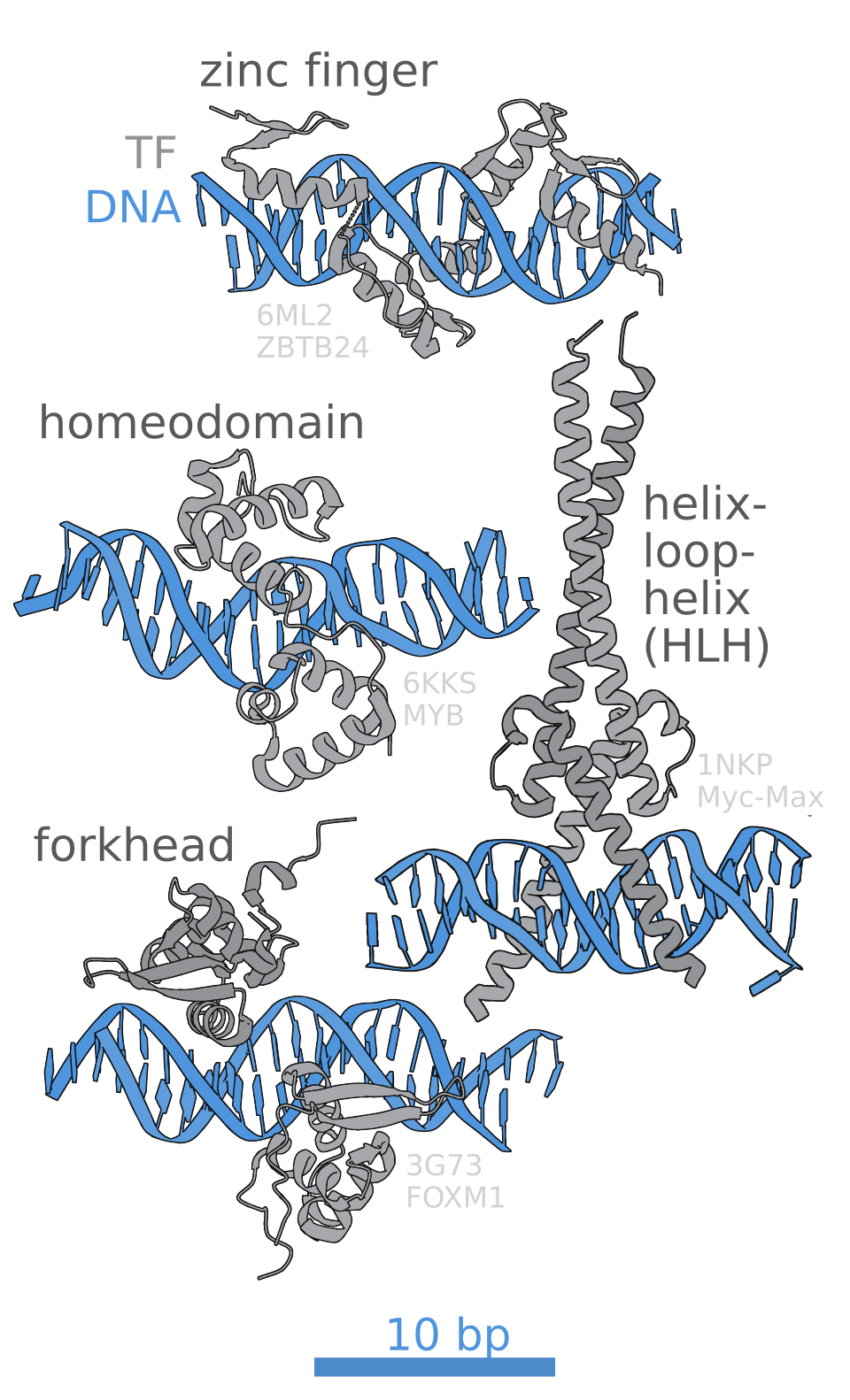
At RIKEN AIP, Statistical Genetics Team, I am looking at large-context DNA sequence models such as Evo2 on NVIDIA GH200 for epigenomic readouts and distal regulation, combining Evo2HiC (sequence and Hi-C) with enhancer–promoter interaction models such as EPInformer.

Slides: view.
Supervised by R. Sakurai and G. Tamiya.
ROADEF Challenge proposed by Orange Research
Several-month optimization challenge proposed by ROADEF (French Operations Research Society) and Orange Research.
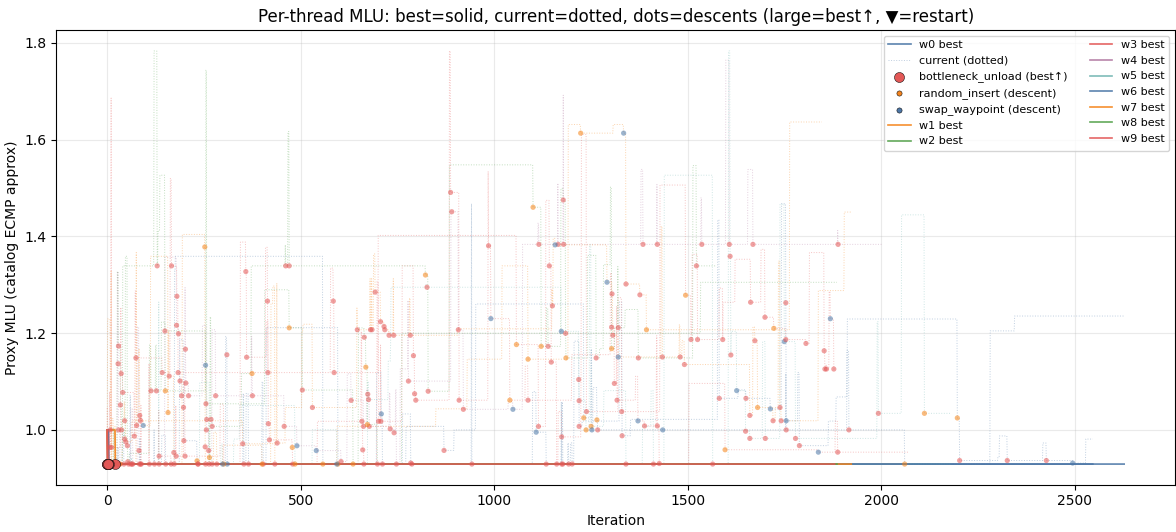
The T-Adaptive Segment Routing (T-ASR) problem consists of routing a set of traffic demands on an IP/MPLS network under planned intervention scenarios (with unavailable links). Segment Routing, makes it possible to deviate traffic from shortest paths by adding waypoints, using Networktools as a baseline.
coolDPLP — GPU-agnostic primal-dual LP solver in Julia
Julia implementation of a primal-dual linear programming (PDLP) solver with GPU-agnostic kernels: JuliaDecisionFocusedLearning/CoolPDLP.jl.
I am currently focusing on the crossover step — moving from an interior-point solution to a basic feasible solution at a vertex of the feasible polytope. A first, simple version uses snapshots of intermediate iterates; a more advanced phase, inspired by the NVIDIA cuOpt simplex crossover, is planned next.
CharlesGPT — home-made documented chatbot
End-to-end project to explore how a small generative model works in practice: web chat UI, FastAPI backend, local GPT-2 inference, token-level metrics (top‑k, embeddings, perplexity) and adjustable sampling parameters.
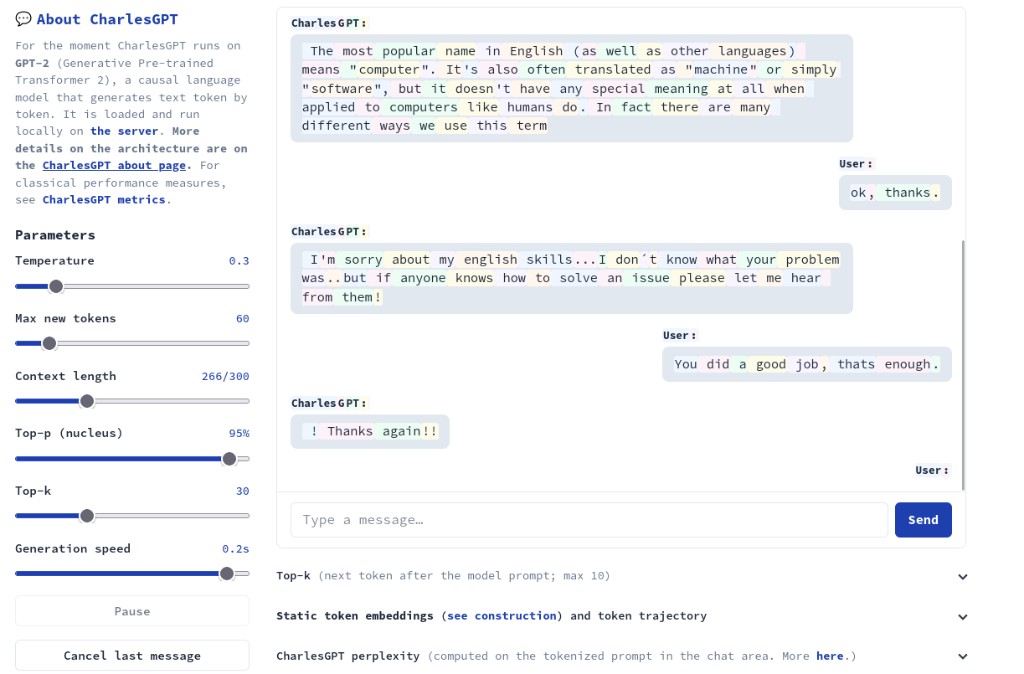
Here for a CharlesGPT demo.
Planned projects I want to work on once I have the time. Feel free to ask questions or propose collaborations — send a message.
modularyNN — GPU acceleration
Extend modularyNN with GPU kernels for benchmarking, testing, and hands-on practice alongside the existing from-scratch CPU implementation.
Repository: charles-vzf/modularyNN.
Lean formalization — shift-commutation equivalence for cellular automata
Working through Lean tutorials and aiming to formalize the Curtis–Hedlund–Lyndon equivalence from my TIPE project: a global map on a configuration space is a cellular automaton if and only if it is continuous and commutes with the shift action (σv ∘ F = F ∘ σv).
KIRO — higher scores and stronger heuristics
Build on past KIRO participations (see completed entry): push for a better score, with new move operators and column generation ideas.
Repository from earlier work: Projet_RO_RTE.
Forum engagement bot — RL experiment
Documented side project: scrape content from an active online community (e.g. image-editing forum), then train a reinforcement learning agent to post edited images and optimize engagement — comments first, then broader reach. Survey similar open-source projects on GitHub; run in an isolated environment and document progress here.
Contact form — human challenge anti-spam
The contact form has no CAPTCHA, CSRF token, or advanced spam filtering yet. Plan: design an original challenge that is easy for humans but hard for bots — not a standard Turnstile/reCAPTCHA widget — possibly powered by a small model whose prompts or scoring improve over time via reinforcement learning on real user responses.
List of selected projects, some of them have their dedicated page you can access.
COPER latents — clinical EHR trajectories (MIMIC-III)
Research at RIKEN AIP, Statistical Genetics Team on MIMIC-III time series: Perceiver- and transformer-style models, including Continuous Patient State Perceiver (COPER) (Chauhan et al., 2024), for patient trajectory embeddings; Markov decision process head-level experiments for interpretability.
On the ICU sepsis MDP (Komorowski et al., AI Clinician), I ran a small RL algorithm benchmark (Q-learning, SARSA, DQN, PPO, SAC) and compared several reward shaping schemes (sparse survival, SOFA-based signals, COPER mortality score).
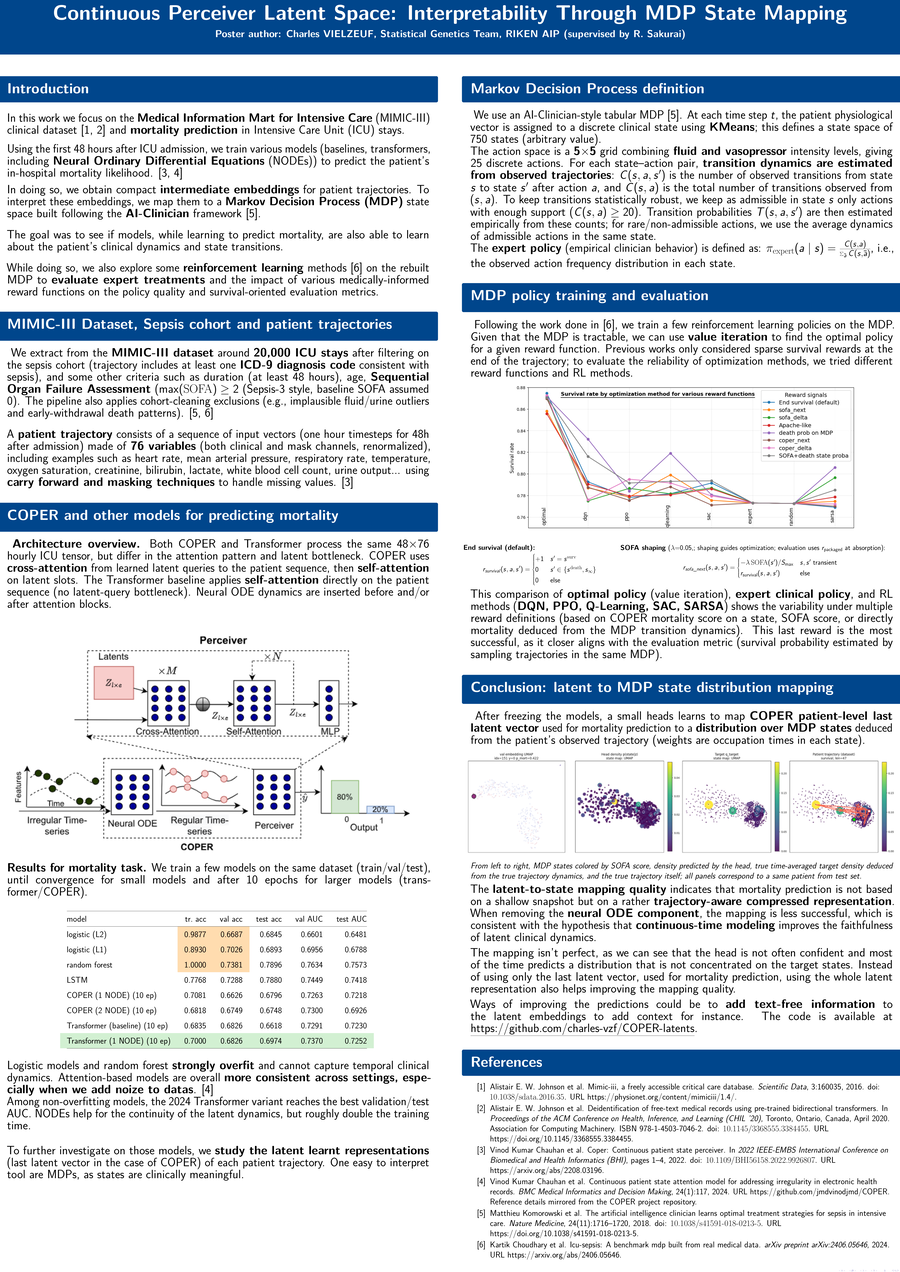
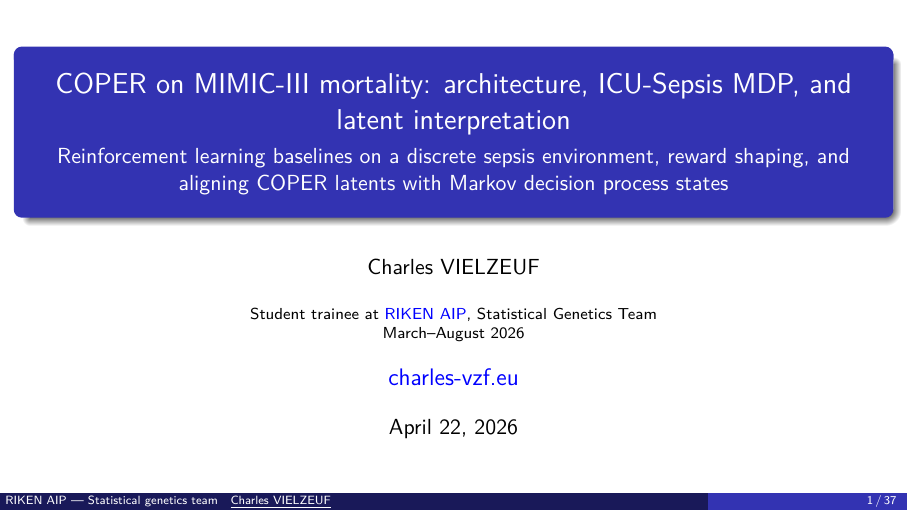
Repository: COPER-latents. Slides: view. Poster: view.
Presented at the AIP Research Exchange Event, 1 June 2026, Nihombashi.
Identifying codes in graphs: study and coding experiments
2-month research project on identifying codes in graphs, based on the paper Charon et al., Minimum Sizes of Identifying Codes in Graphs Differing by One Vertex.
Under the supervision of Prof. O. Hudry.
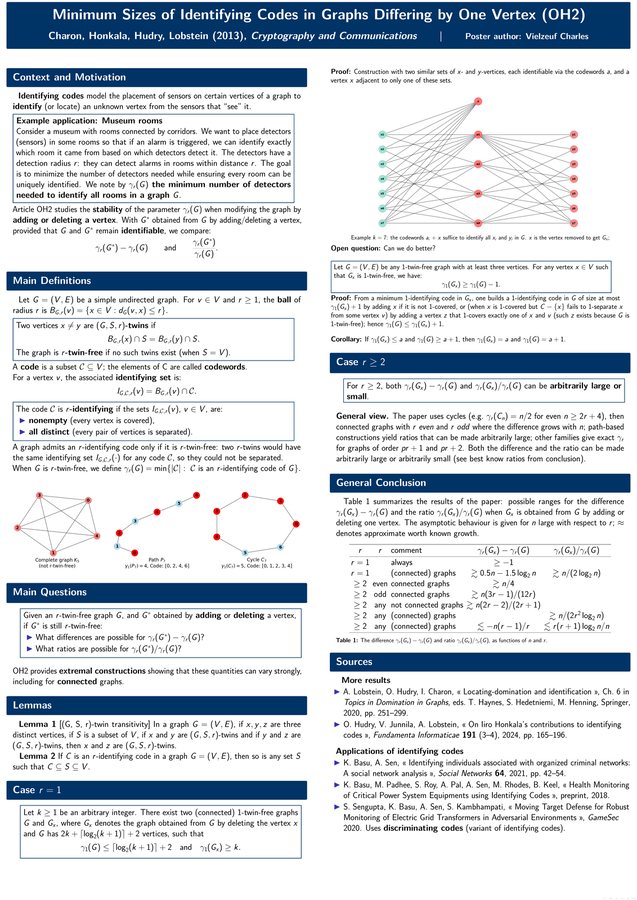
Poster: view.
Coding experiments and implementations: Identifying_codes_graphs.
Participation in the 2026 Land-Doig MIP Competition
Participation in the 2026 Land-Doig MIP Competition on GPU-accelerated primal heuristics for mixed-integer linear programming, alongside the Mixed Integer Programming Workshop 2026. I implemented large neighborhood search in Julia with KernelAbstractions.jl, a GPU-agnostic kernel framework.

Workshop: mixedinteger.org/2026. Competition & tutorial: here.
CPSolver — Constraint Satisfaction Problem solver
A constraint programming solver developed as part of a Parisian Master of Operations Research Constraint Programming class (course page).
Under Prof. D. Savourey.
╔══════════════════════════════════════════════════════════════════════════════╗
║                                                                              ║
║    ██████╗██████╗      ███████╗ ██████╗ ██╗    ██╗ ╔██ ███████╗██████╗       ║
║   ██╔════╝██╔══██╗     ██╔════╝██╔═══██╗██║    ██║ ║██ ██╔════╝██╔══██╗      ║
║   ██║     ██████╔╝ ██  ███████╗██║   ██║██║    █║   ║█ █████╗  ██████╔╝      ║
║   ██║     ██╔═══╝      ╚════██║██║   ██║██║    ║█   █║ ██╔══╝  ██╔══██╗      ║
║   ╚██████╗██║          ███████║╚██████╔╝╚██████╚█████╝ ███████╗██║  ██║      ║
║    ╚═════╝╚═╝          ╚══════╝ ╚═════╝  ╚════╝ ╚═══╝  ╚══════╝╚═╝  ╚═╝      ║
║                                                                              ║
║              Constraint Satisfaction Problem Solver                          ║
╚══════════════════════════════════════════════════════════════════════════════╝
Main solver components include the DIMACS CSP parser, constraint propagation with AC-3 and forward checking, variable/value ordering heuristics (such as MRV and LCV), and a backtracking search engine to enumerate solutions.
Repository: charles-vzf/CPSolver.
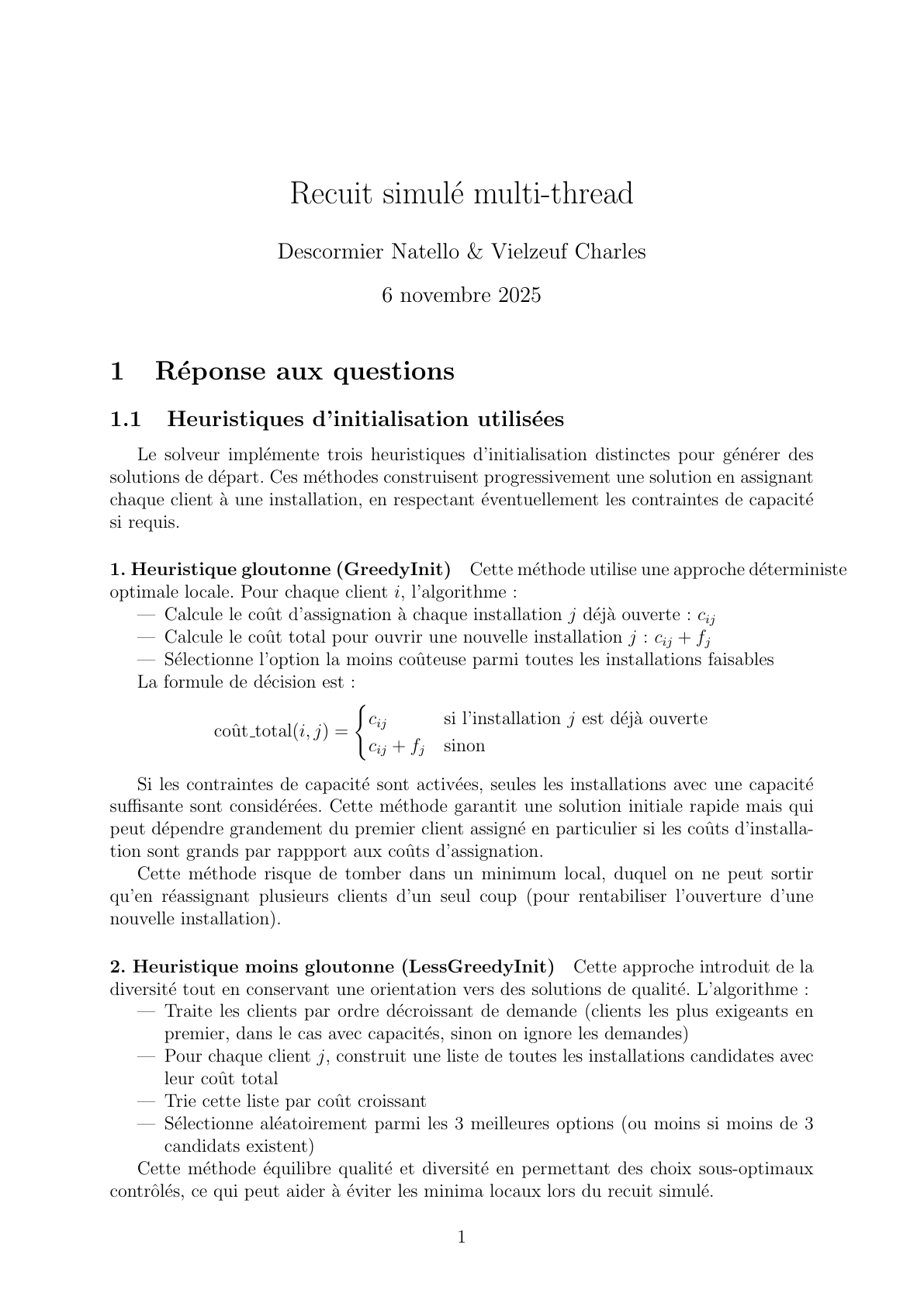
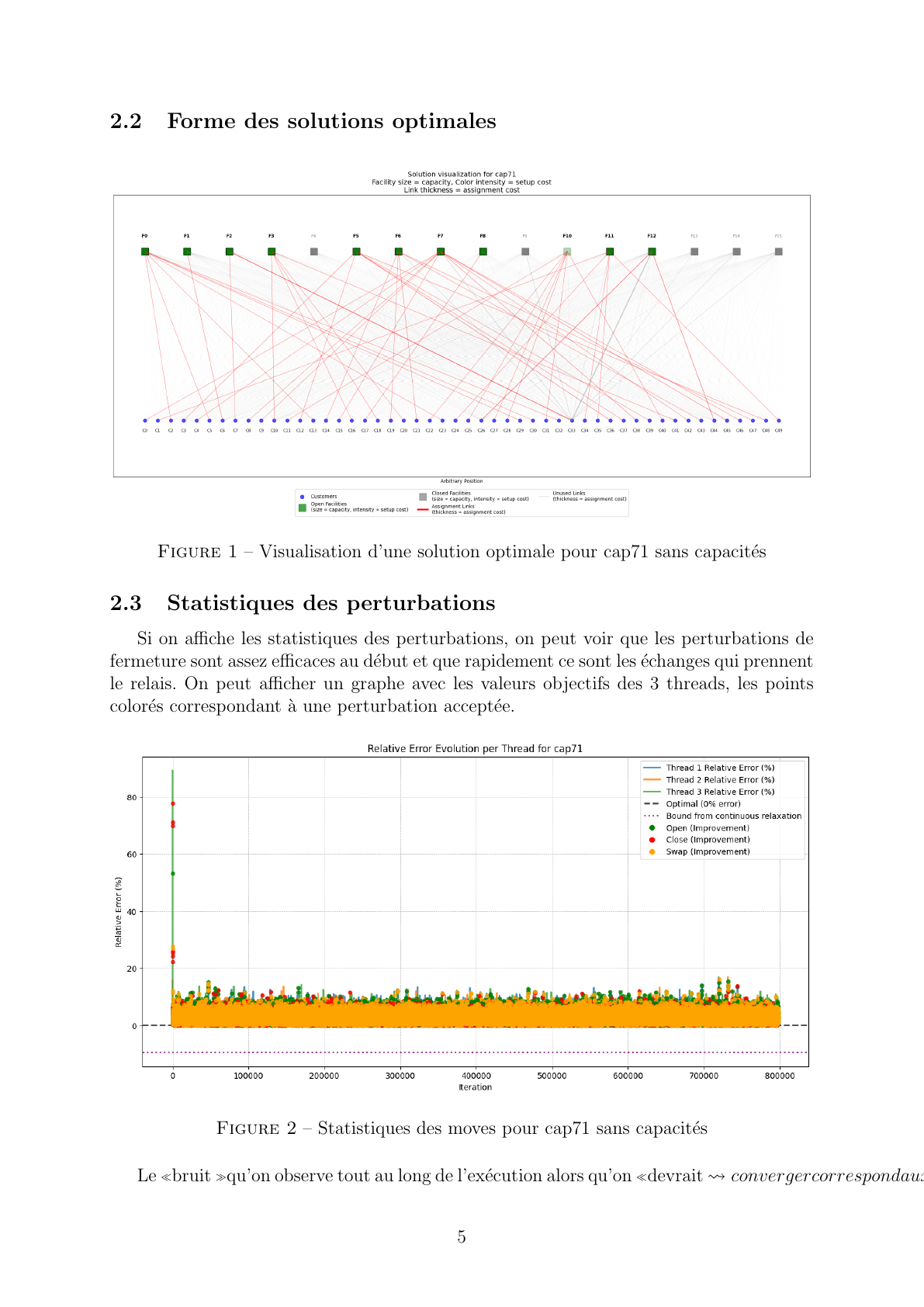
(Un)capacitated Facility Location Problem
The (Un)capacitated Facility Location Problem is a classic optimization problem in operations research and logistics. The problem involves determining the optimal locations for facilities (such as warehouses, distribution centers, or service centers) to serve a set of customers while minimizing total costs.
We developed a multithreaded simulated annealing heuristic based on several initialization and perturbation strategies, reviewed by Prof. A. Plateau.
Experiments for propagation of chaos in mean field underdamped regime for wide neural networks
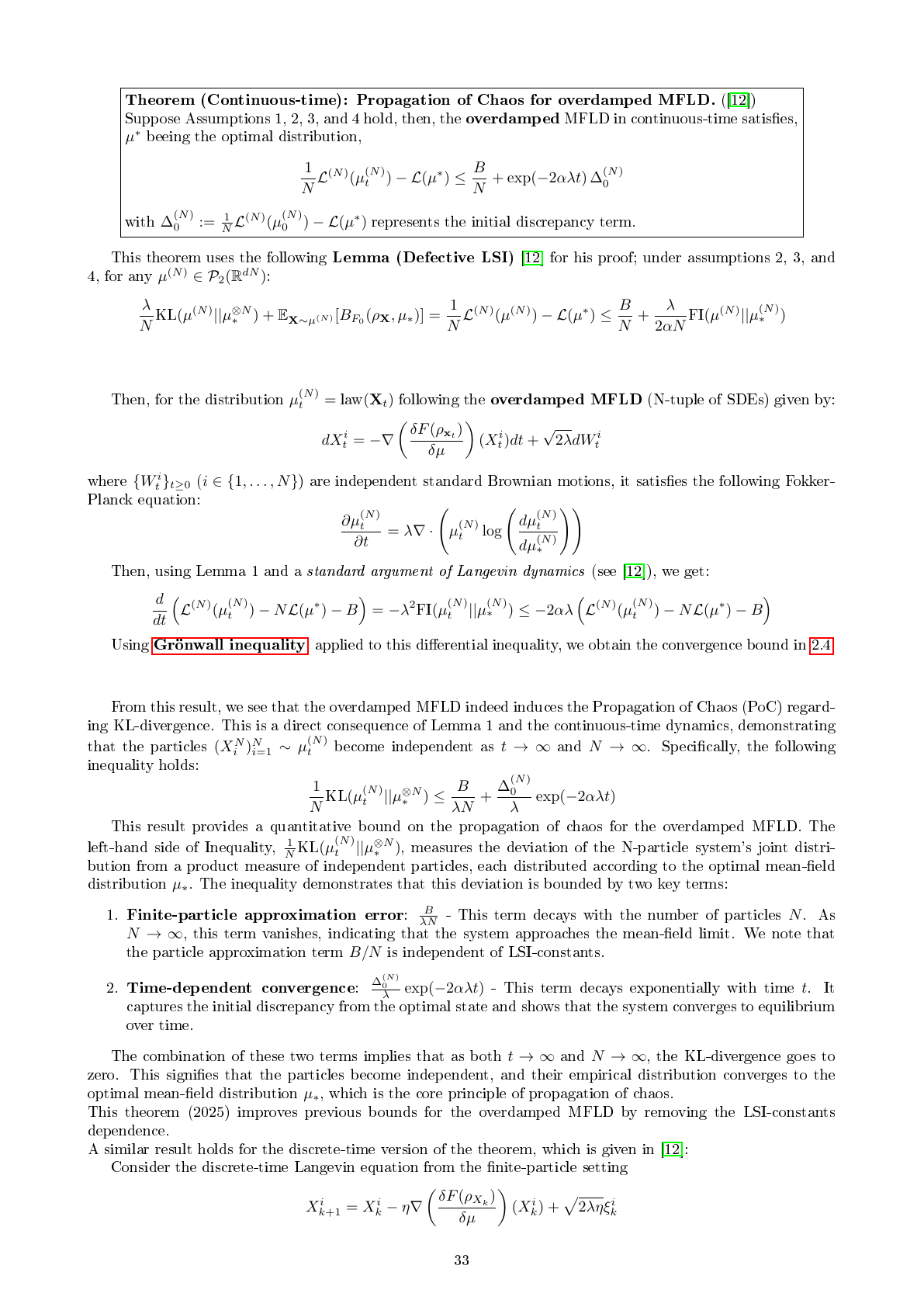
5-month internship at RIKEN AIP (Deep Learning Theory Team).
Under the supervision of Prof. T. Suzuki.
Studying Propagation of Chaos for Mean-Field Langevin Dynamics and its Application to Model Ensemble. Discussing hypothesis, and providing experimental validation, see code, and report: view.
ModularyNN — modular neural network framework (Python)
Lightweight, composable neural network building blocks for experiments and teaching: customizable layers and training loops.
from scratch (no advanced libraries).
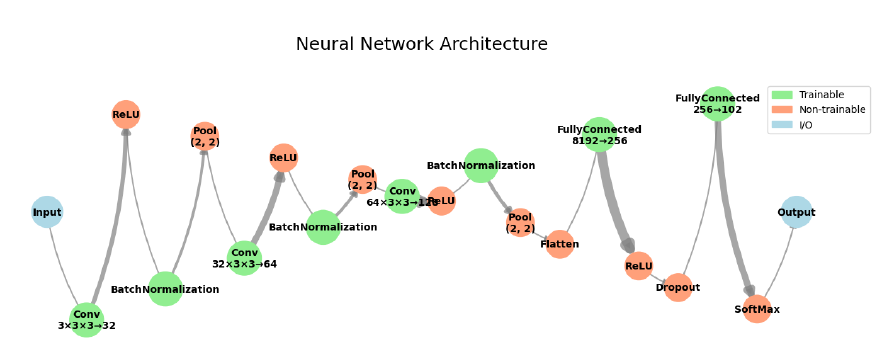
Repository: modularyNN.
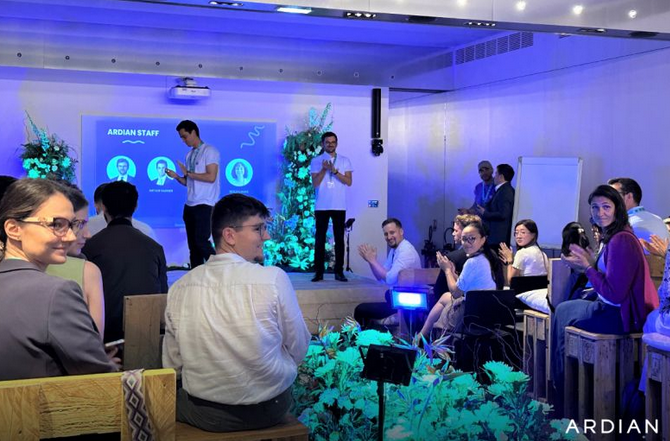
Technical support for Ardian startup studio
3-day Ardian Startup Studio hackathon.
Technical support for prototyping ideas for internal use at Ardian France; demonstrated feasibility and identified long-term limitations.
Yearly event in Paris (see Artefact press release).
KIRO Inter School Operational Research Challenge
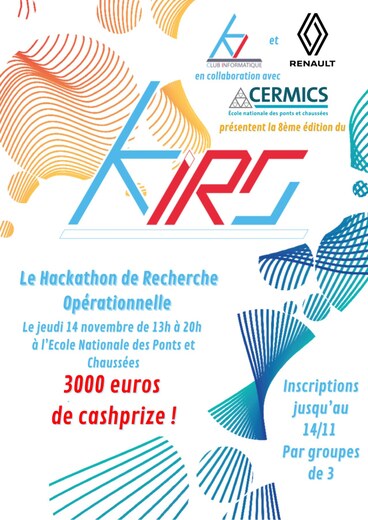
3 participations with strong results on optimization problems from RTE, Renault, and Pelico. See KIRO challenge.
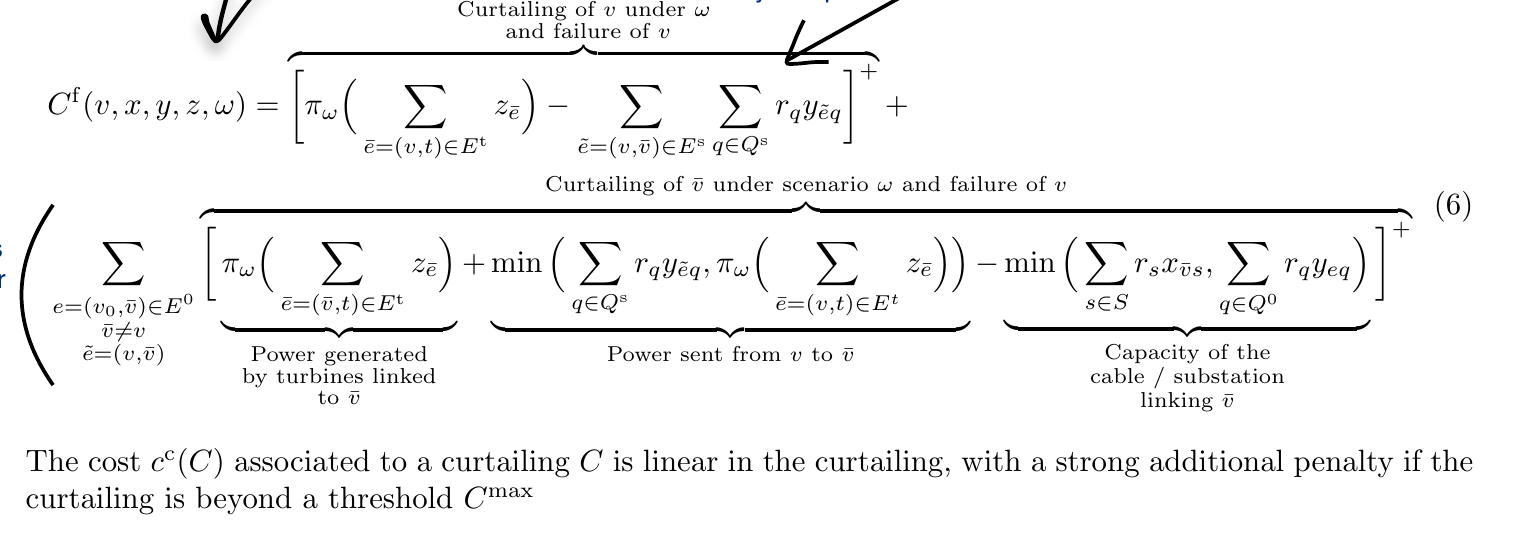
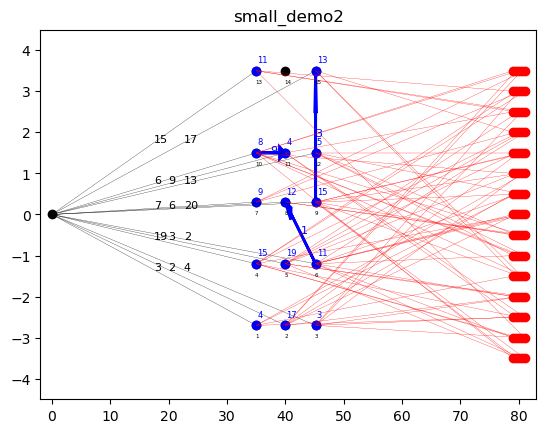
Repository from first participation (extended): Projet_RO_RTE.
AI and machine learning for theme park attraction attendance prediction
One-day challenge by Eleven Strategy at Ecole des Ponts; ranked 2nd. With Mathis Wauquiez and Célestin Hans as teammates.
See our slides: view.
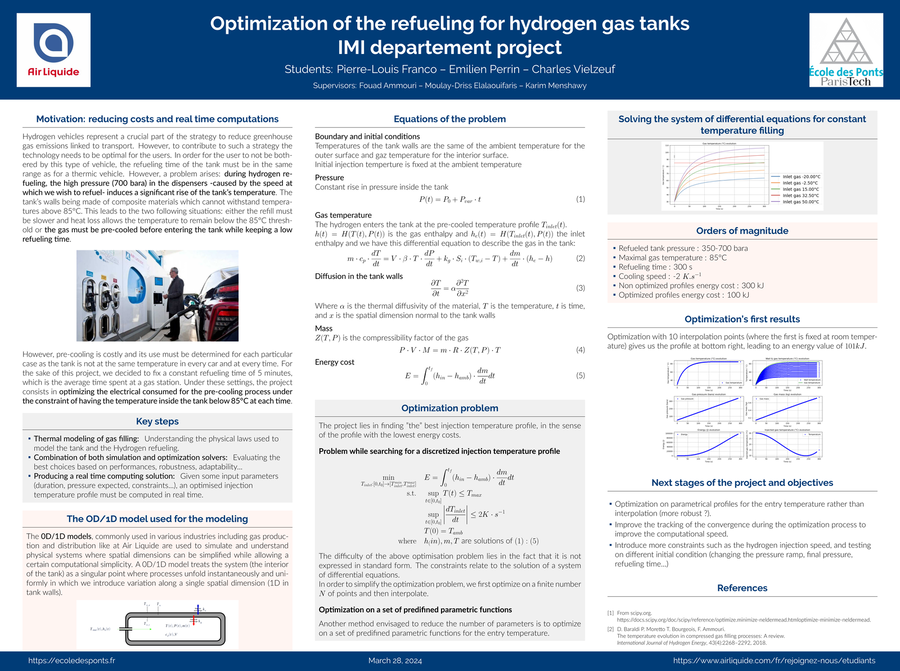
Simulation and learning for gas storage real-time refueling optimization
6-month project at École des Ponts (mathematical engineering and computer science department), in partnership with Air Liquide R&D, on optimizing hydrogen tank refueling for user convenience and cost efficiency.
High-pressure refueling heats hydrogen tanks and can approach material limits. The aim was to keep refueling time reasonable while holding the tank below 85 °C and limiting energy use. We used a 0D/1D thermal model for the tank walls, coupled simulations with optimization solvers, and developed a real-time scheme to compute optimal injection temperature profiles — with better cost results than previous naive methods.
Differential and Riemannian geometry — general relativity and black hole trajectory simulation
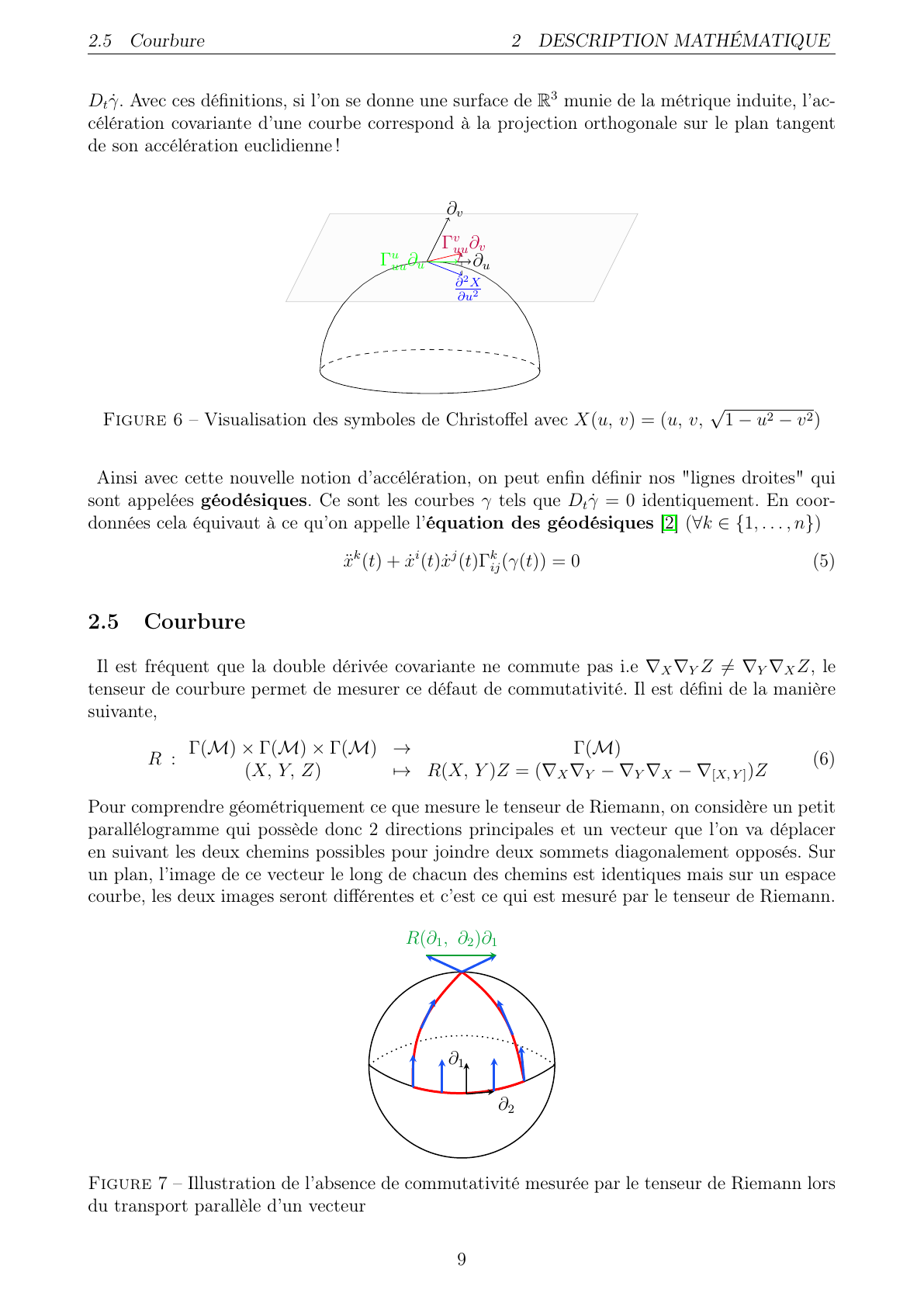
6-month research project (1st year, Ecole des Ponts).
Reproducing results from generic simulations. Supervised by Prof. Éric Cancès.
You can see our report here: view.
Study of the torsion of a parallelepiped in 3D Modeling with Cast3M
This project models and visualizes the 3D torsion behavior of a parallelepiped using Cast3M, a structural analysis and fluid mechanics simulation code, to analyze its thermomechanical response under deformation (see Cast3M). Supervised by Prof. L. Dormieux.
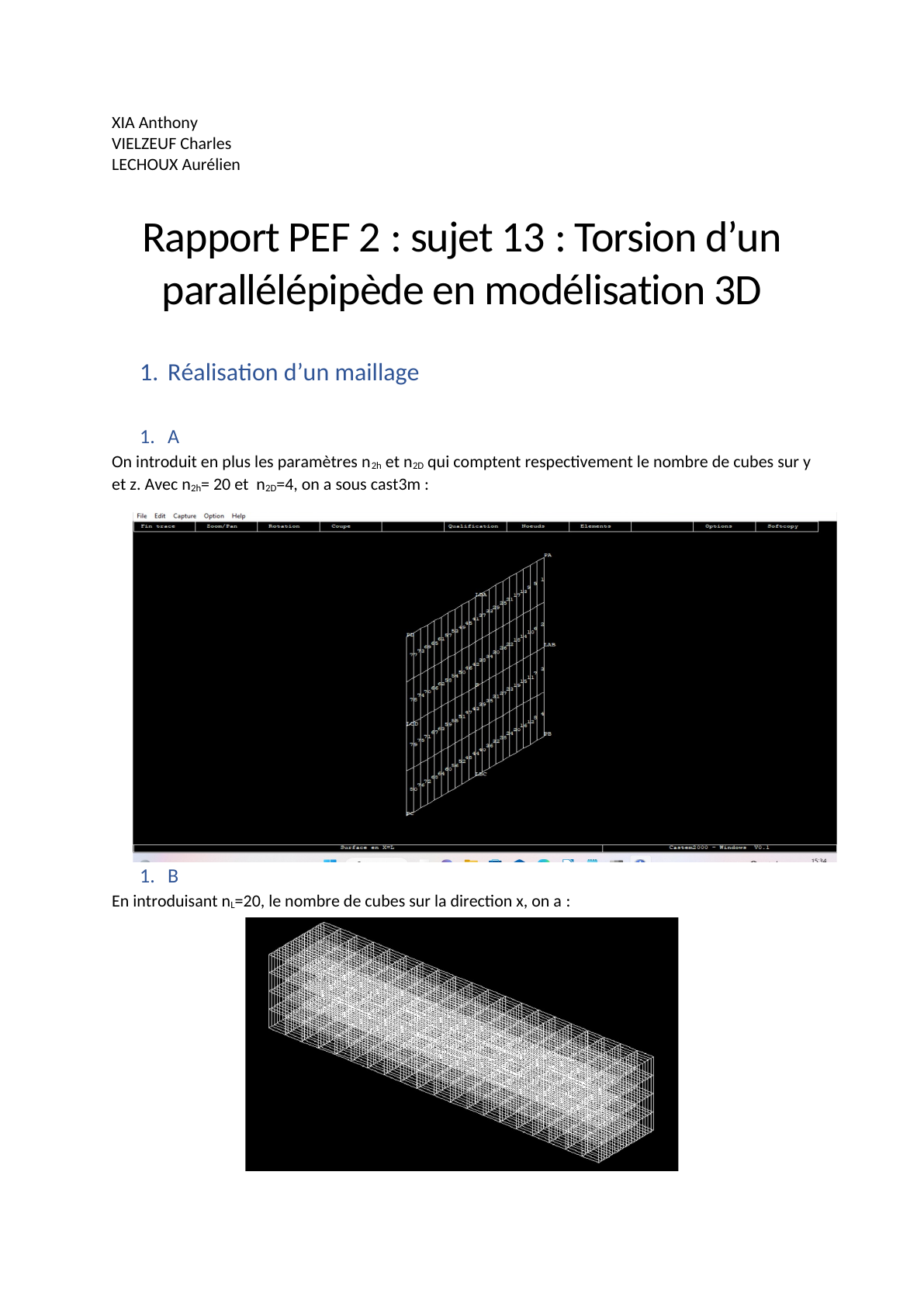
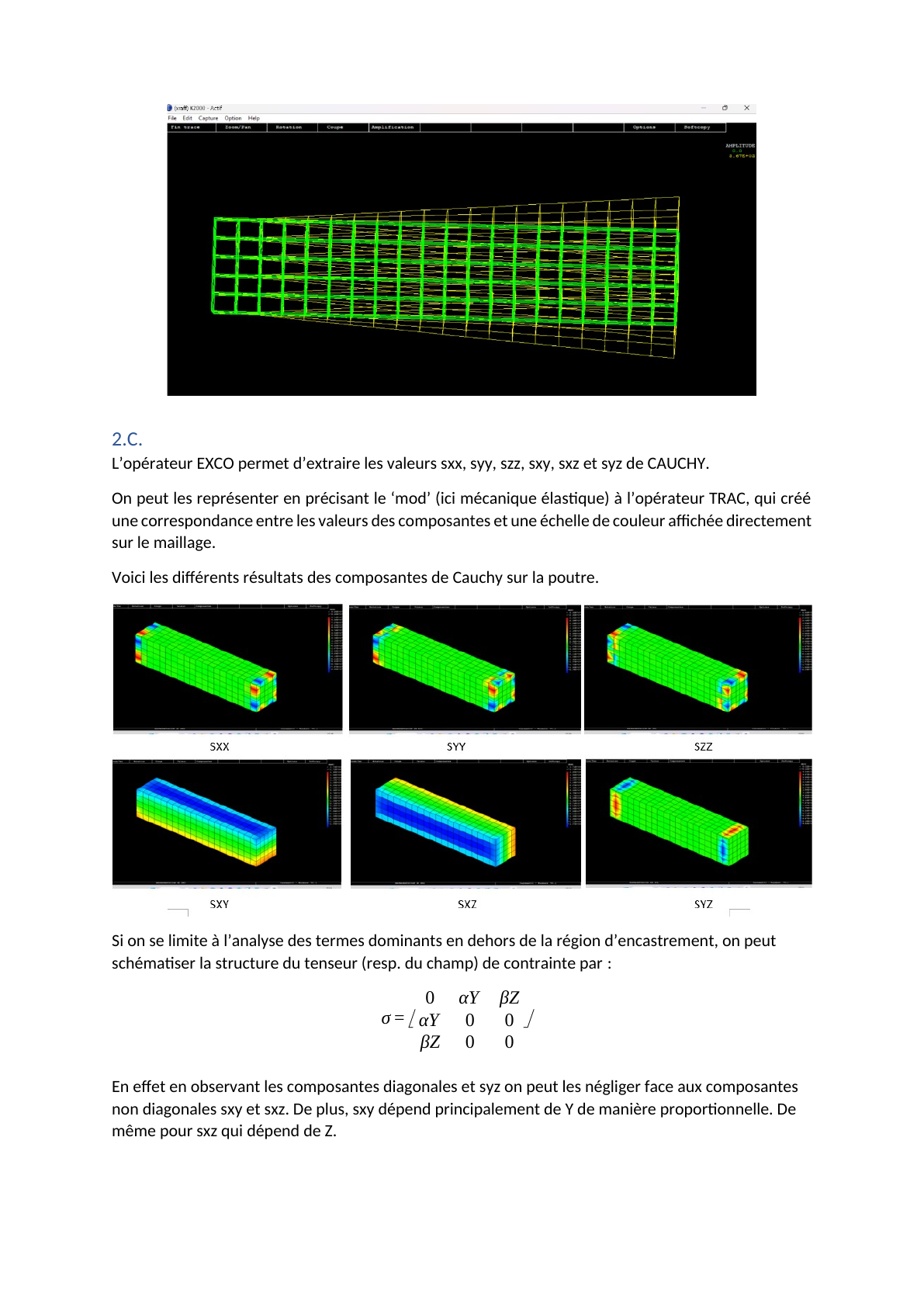
Report: view PDF (in French).
Modeling granular media using cellular automata
TIPE (Travail d’initiative personnelle encadré) during two years of mathematical and physics preparatory classes (MP).
After a general study of cellular automata — discrete dynamical systems with local evolution rules — I built a simplified solid/liquid erosion model reproducing transport and crater formation. Open-source simulations in Golly with custom rules, combining hashing techniques with macro-cell methods so large runs remain tractable. Brief discussions with A. Trevorrow.
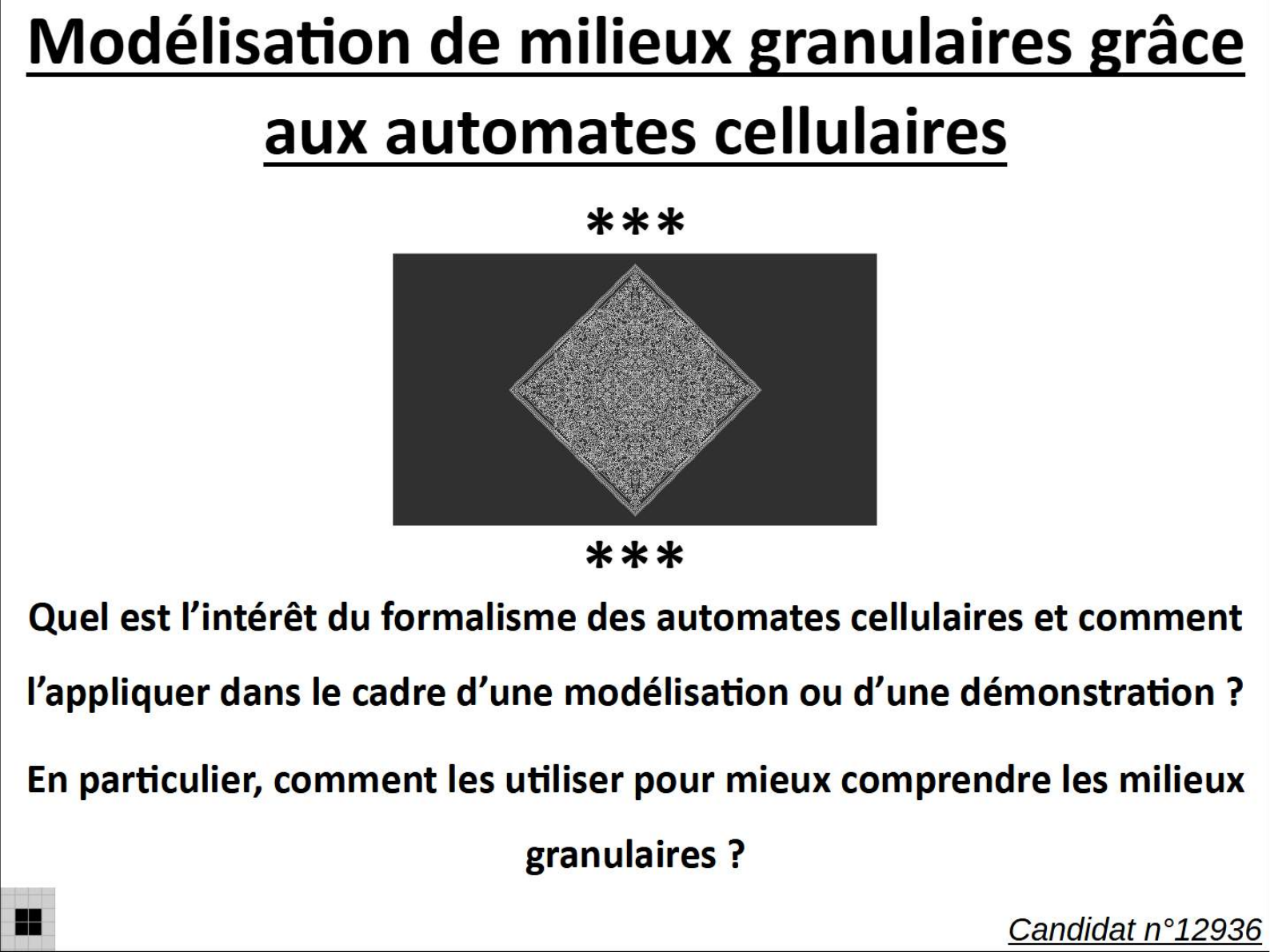
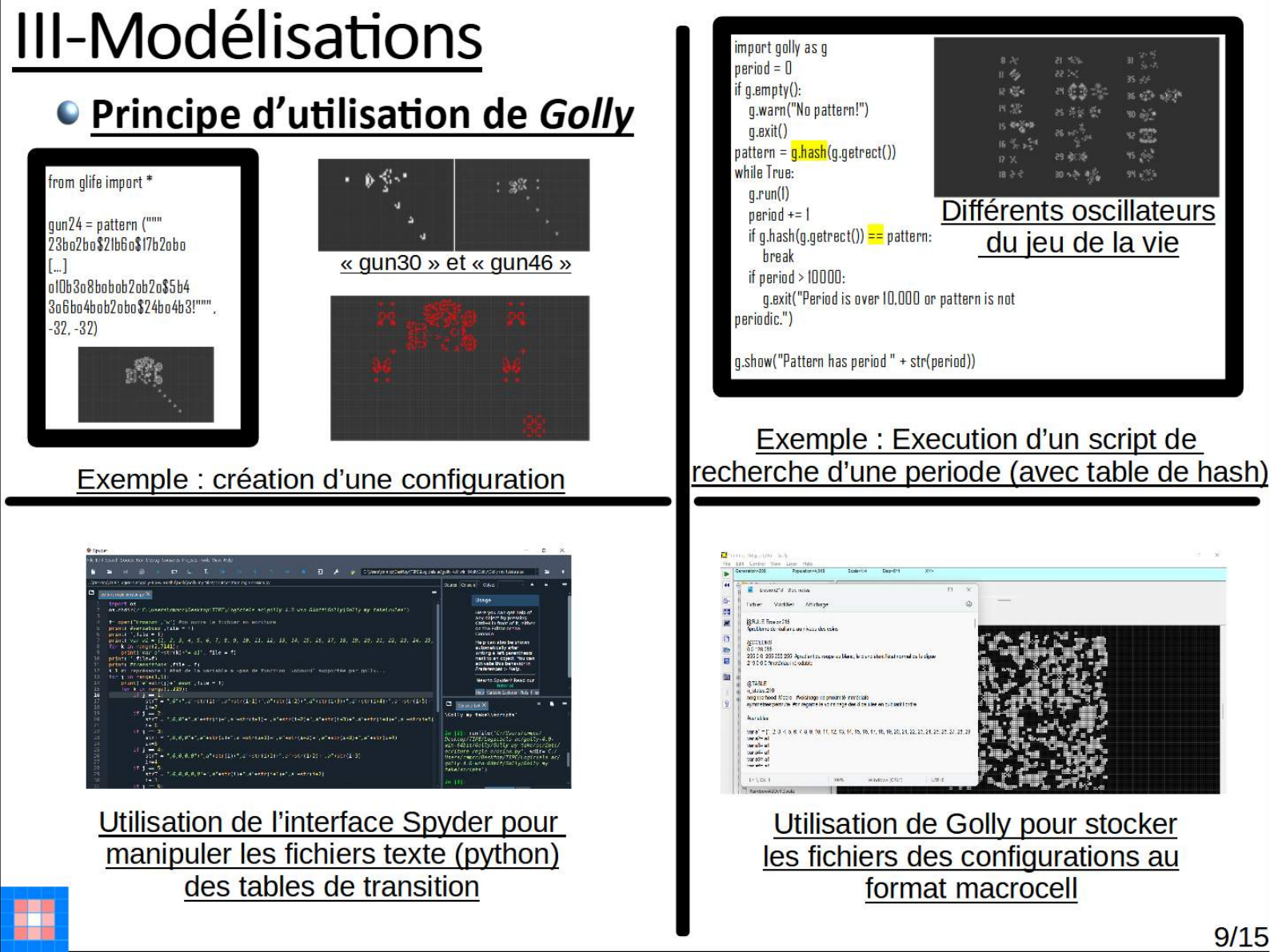
See the short description and the slides (both in French).
Eratosthenes: history & science overview (3rd c. BC)
Cross-disciplinary high-school group project between history and science, centred on Eratosthenes of Cyrene: the sieve of Eratosthenes for prime numbers and his method for estimating Earth’s circumference with surprisingly good accuracy once measurement uncertainty is taken into account—impressive given that many civilizations did not yet treat Earth as round long afterwards.
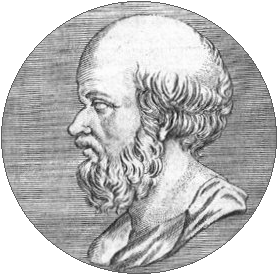
Report (French): view PDF.
TI-83 Premium CE coding
Early prgm management, game design, recursivity, and small calculator utilities on TI-83 Premium CE.
Download programs directly: Snake, DDJump, Guitare (easy tab visualization), Labyrinth.